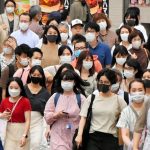
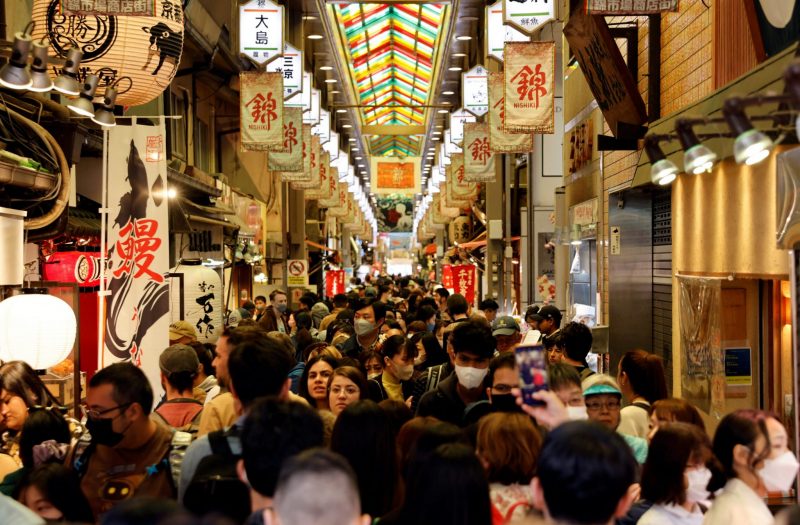
I am sure you have heard about the number of tourists here in Japan. You have probably heard some of the horror stories, and many of them are true. I live in Kyoto, and everywhere you go here, there are crowds of tourists. I refuse to ride the buses anymore because the tourists have taken over many of the bus lines. The subways are busy, but at least they are somewhat reasonable. If I cannot get where I want to go using subways or trains, I use a taxi.
In response to the over tourism, cities are creating their own responses to the problem. The city of Himeji has announced starting on March 1, the city will double the entrance fees for non-residents at Himeji Castle. The intent will be to use the extra fees to support changes needed for the larger crowds visiting the castle. Starting on March 1, the city of Kyoto will charge a 10% surcharge for non-residents at the hotels. Once again, the extra fees will be used to support the changes needed to support the extra tourists. The city of Kyoto also restricted access to some of the areas in the Gion Geisha District. Many of the areas are very narrow walkways, and the crowds of tourists made it impossible to get around. The city also made public announcements to not touch the Geiko and Maiko (they call the Geisha Geiko in Kyoto.) after tourists were caught impeding the Geiko and Maiko to get selfies.
The larger crowd sizes can certainly be overwhelming, and can certainly detract from the experience of visiting the destinations. Many people think you have to travel long distances to avoid the crowds. The truth is you don’t have to go far beyond the “must see” destinations to get away from the crowds. We made a number of changes to our tour itineraries to avoid the larger crowds while still creating the tour experience we try to provide. And we will be making more changes next year.
Many of our itineraries go to out-of-the-way destinations. Those itineraries are not a problem. But the itineraries that visit the “must see” destinations are usually mobbed by tourists. Places like Kyoto cannot be missed by the first time visitor to Japan. We are now using more taxies in Kyoto, which helps.
We have dropped destinations such as Takayama and Shirakawago this year. The number of tourists have overwhelmed the tourist infrastructure at destinations like this. If you don’t have a reservation at a restaurant for lunch, you have to wait an eternity to get a table.
And we are looking at dropping Hakone next year. We will replace it with one of the onsen near the entrance to the Izu Peninsula. There are numerous places to get a good view of Fuji-san from the Izu Peninsula. And staying there allows us to see other things such as wasabi fields (It is said that wasabi was first grown in Japan on the Izu Peninsula hundreds of years ago.), waterfalls, and the coastlines. And the size of the tourists crowds are much, much smaller.
Our knowledge of the Japan travel landscape allows us to avoid the large crowds where we think they should be avoided, and still provide the type of tour we aim to provide while saving you time and money. Japan is not just another country to us. It is who we are and what we do.
To make a long story short, when you dump a large number of people who do not know the local customs, or don’t care, into a culture with a heightened sensitivity to good manners, it is easy to understand how emotions can be on edge. It is difficult to know and understand all the rules here. If you find yourself on the receiving end of a scolding by a local, just remember to apologize multiple times and follow their directions. Do not argue or ask questions. That will only make it worse.